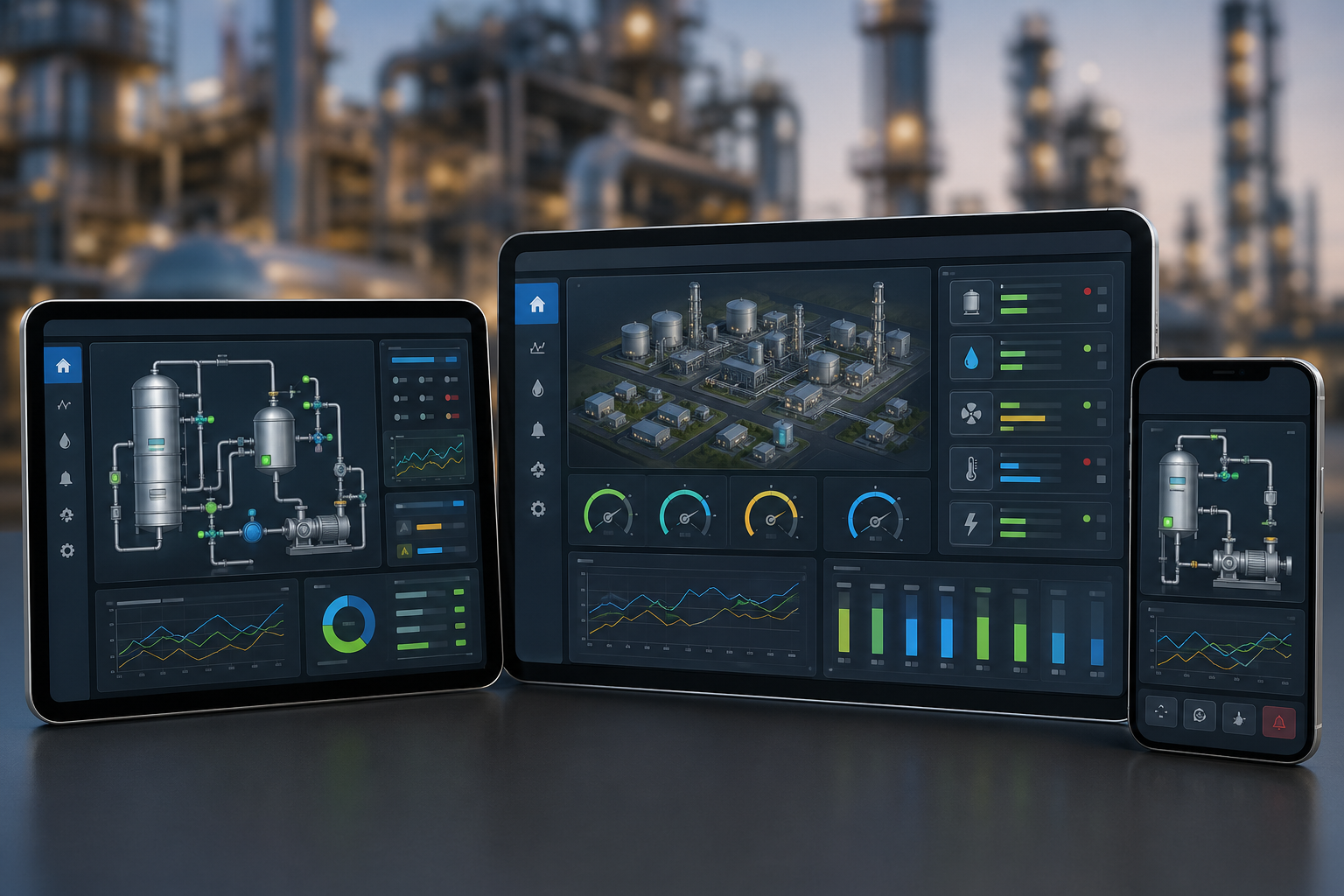
Manufacturing Monitoring Upgrade
Integration speed improved by 38%, incident response time reduced by 42%.
- Challenge: seven protocol families and fragmented legacy systems across production lines.
- Objective: unify monitoring and alarm handling without disrupting ongoing operations.
- Solution: consolidated driver-based ingestion, tiered alarm strategy, and line-level dashboards.
- Execution: phased rollout from critical lines to full workshop coverage.
- Outcome: integration cycle improved by 38%, response time reduced by 42%.
- Business value: lower night-shift pressure and better real-time production visibility.
Warehouse Device-Business Linkage
Exception discovery moved ahead by 16 minutes, ops workload reduced by 29%.
Exception Discovery
-16 min
- Challenge: task workflow in WCS was disconnected from real device status.
- Objective: unify task, alarm, and on-site diagnostics into one operator view.
- Solution: bi-directional linkage between WCS/WMS task nodes and device alarms.
- Execution: prioritized conveyor and stacker chains with peak-hour stress validation.
- Outcome: exception discovery moved 16 minutes earlier; ops workload reduced by 29%.
- Business value: lower peak-time downtime risk and faster dispatch decisions.
Remote Operations for Energy Sites
Alarm validity improved by 31%, remote ops efficiency improved by 36%.
- Challenge: distributed sites with high alarm noise and inconsistent response quality.
- Objective: build a centralized operations view for prioritized remote handling.
- Solution: multi-site consolidation, alarm denoising, escalation rules, and duty routing.
- Execution: region-by-region onboarding with historical threshold tuning.
- Outcome: alarm validity improved by 31%, remote operations efficiency by 36%.
- Business value: reduced patrol cost and improved critical incident handling SLA.
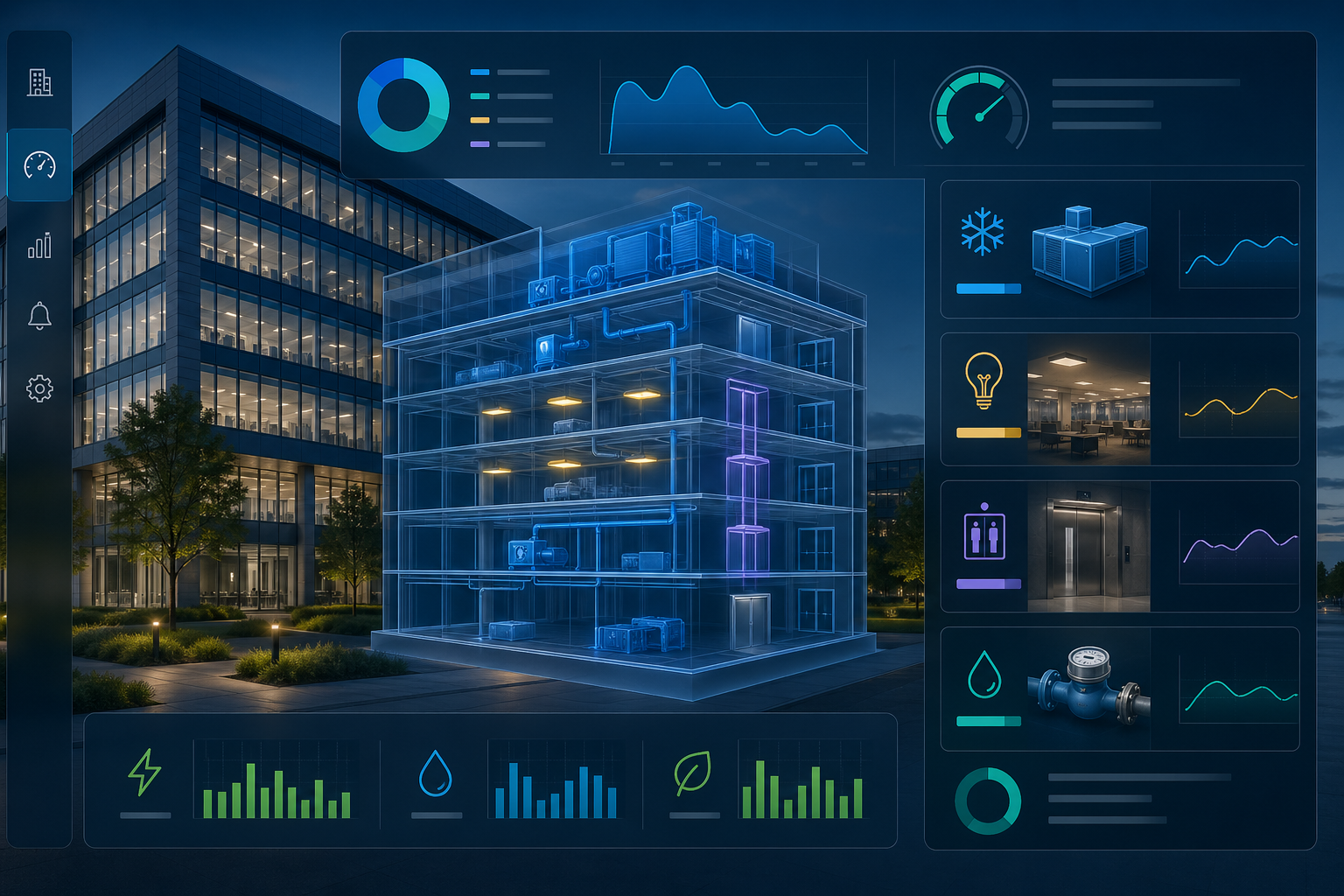
Campus Integrated Monitoring
Cross-team collaboration improved by 27%, processing time reduced by 33%.
- Challenge: isolated subsystems (security, environment, energy) and long response chains.
- Objective: shorten cross-team response time and improve event closure quality.
- Solution: unified data access layer, role-based permissions, and audit-enabled workflows.
- Execution: delivered central dashboard first, then mobile inspection and tracking views.
- Outcome: collaboration improved by 27%, processing time reduced by 33%.
- Business value: better governance and faster management-level incident visibility.
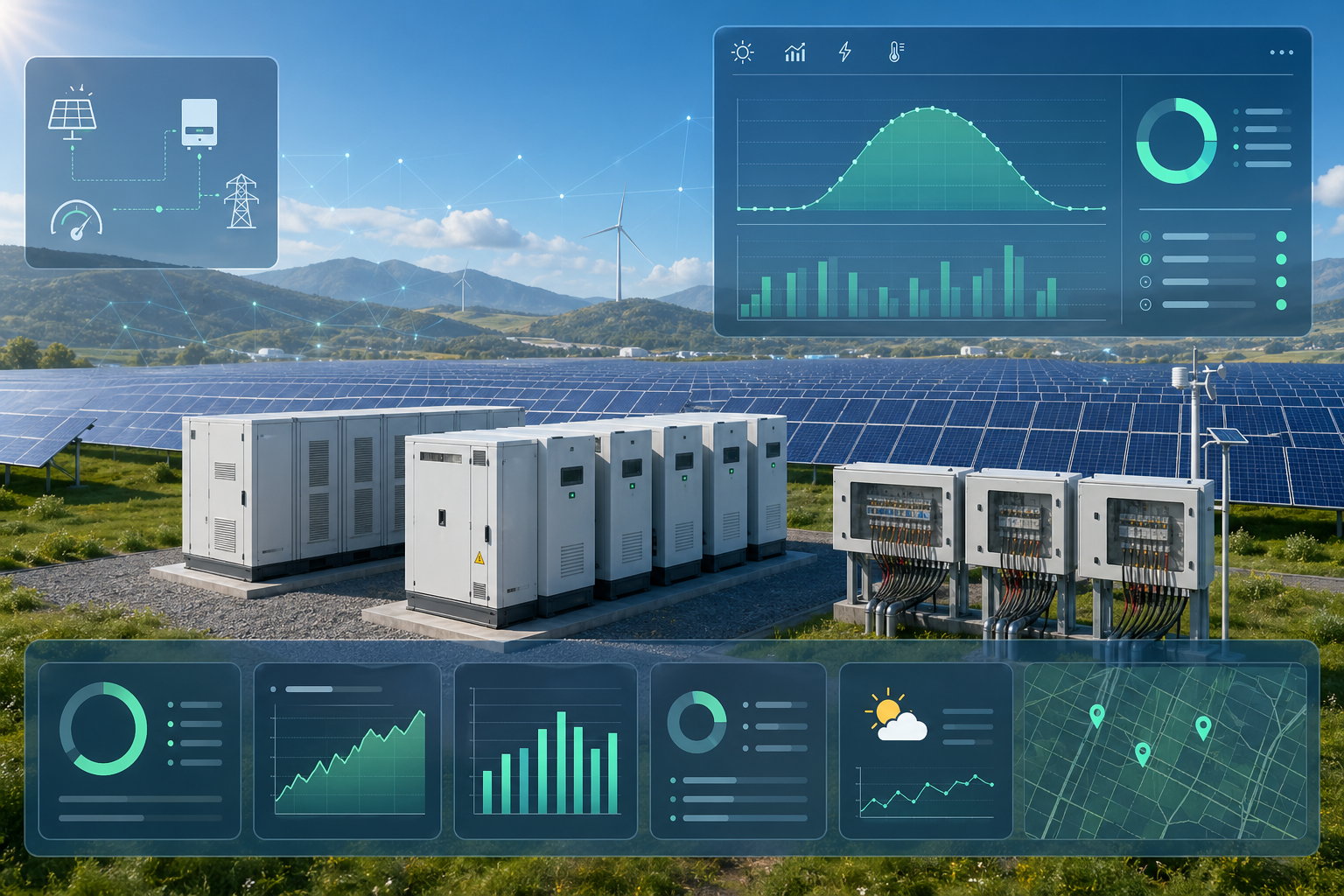
New Energy Plant Modernization
Remote inspection frequency reduced by 24%, asset availability increased by 18%.
- Challenge: distributed plants with unstable links and slow post-offline recovery.
- Objective: improve edge reliability and reduce repetitive on-site troubleshooting.
- Solution: tuned collection strategies, robust reconnect policies, and health visibility.
- Execution: configured polling by device class and added automated anomaly notifications.
- Outcome: remote inspection frequency reduced by 24%, availability increased by 18%.
- Business value: reduced O&M overhead and better control of outage duration.
Industrial Group Data Hub Integration
Integration cycle reduced by 41%, API stability improved by 35%.
- Challenge: inconsistent interface contracts between MES, ERP, and monitoring systems.
- Objective: standardize integration patterns and improve interface reliability.
- Solution: gateway adaptation layer, unified data model, and idempotent retry mechanism.
- Execution: rolled out through core business chains before migrating legacy integrations.
- Outcome: integration cycle reduced by 41%, API stability improved by 35%.
- Business value: cross-system coordination efficiency improved by 22%.
Power Dynamic Environment Monitoring
Alarm validity improved by 34%, night-shift workload reduced by 28%.
- Challenge: heterogeneous dynamic-environment subsystems with high alarm noise.
- Objective: standardize remote monitoring and tiered alarm handling across sites.
- Solution: integrated UPS, HVAC, distribution, and access-control telemetry with alarm routing.
- Execution: region-by-region rollout with historical threshold tuning and denoising optimization.
- Outcome: alarm validity improved by 34%, night-shift workload reduced by 28%.
- Business value: faster incident visibility and smoother operations collaboration.
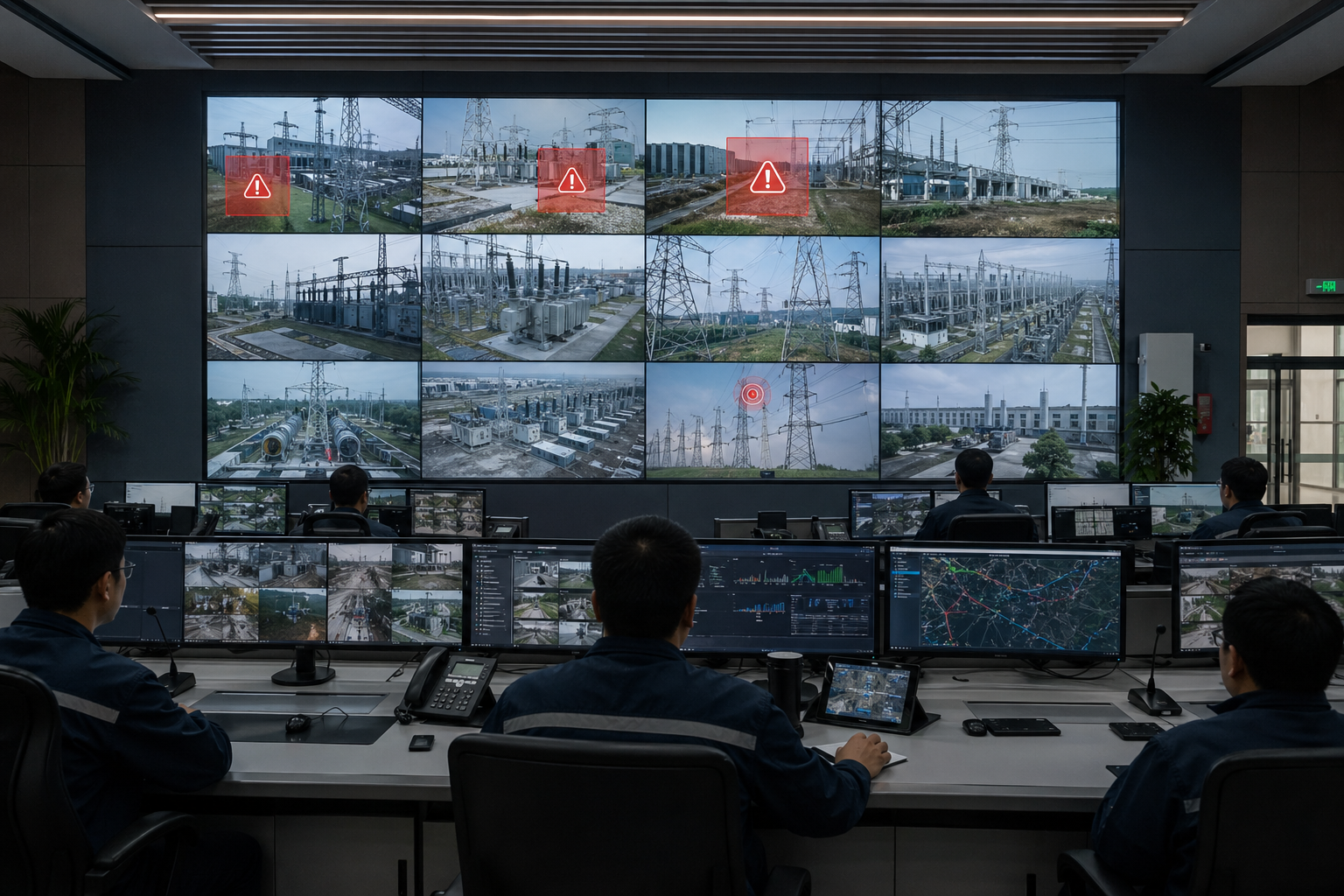
Power Video Inspection Linkage
Incident localization time reduced by 39%, on-site inspections reduced by 31%.
Inspection Coverage
Improved
- Challenge: manual patrol workflows made evidence collection and fault localization slow.
- Objective: enable alarm-triggered video workflows with full traceability.
- Solution: mapped telemetry alarms to camera streams and playback shortcuts.
- Execution: started from high-risk areas, then expanded to full-site inspection routines.
- Outcome: localization time reduced by 39%, on-site inspection frequency reduced by 31%.
- Business value: reduced repetitive patrol and faster critical-incident verification.
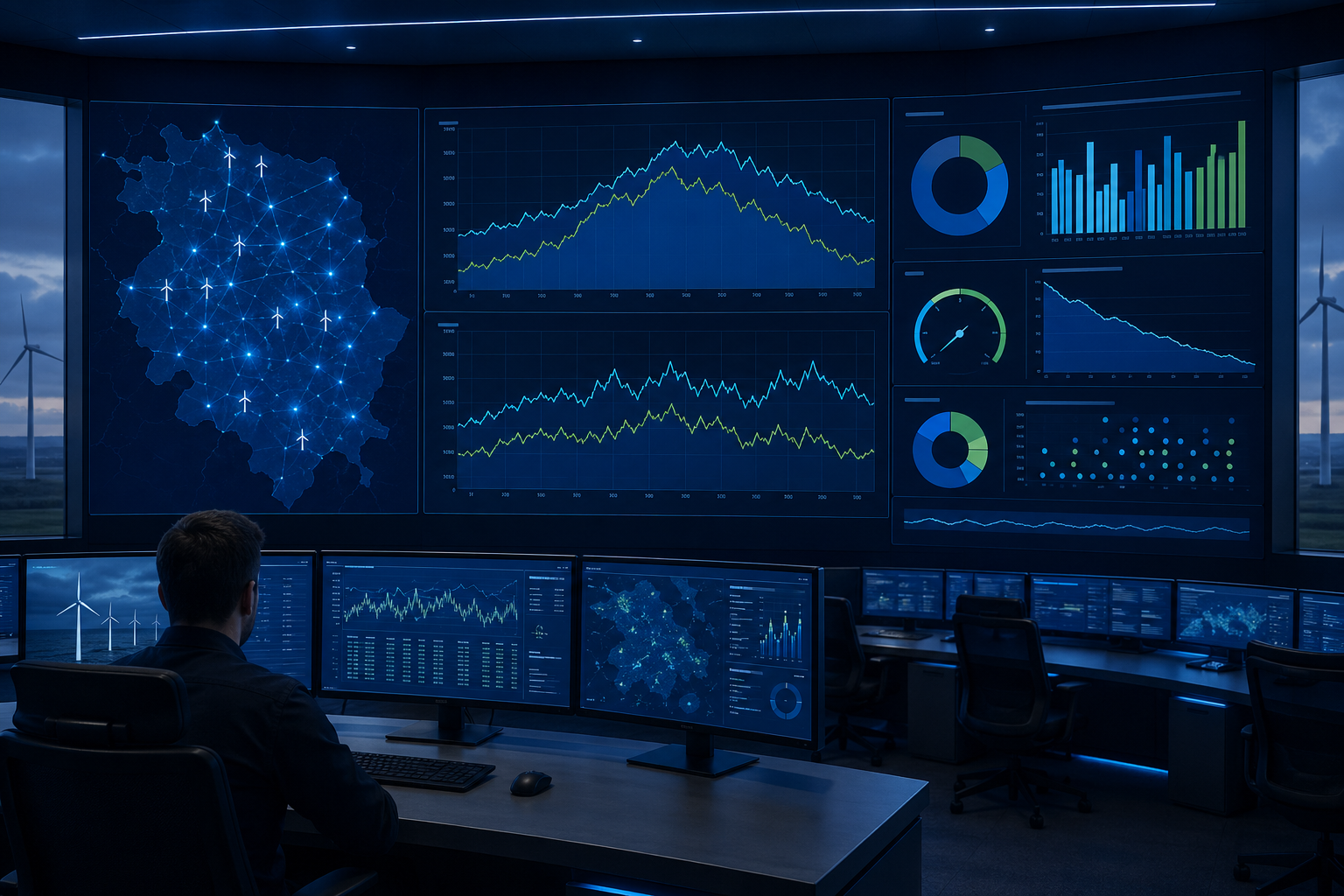
Wind Energy Management Platform
Generation deviation analysis efficiency improved by 33%, settlement checks reduced by 26%.
Settlement Check Time
-26%
Dispatch Transparency
Improved
- Challenge: fragmented generation plan/actual/curtailment data across farms.
- Objective: unify metrics for dispatch, assessment, and settlement workflows.
- Solution: built dedicated wind energy management modules with consistent KPIs.
- Execution: delivered daily dashboards first, then monthly assessment and settlement reports.
- Outcome: deviation analysis efficiency improved by 33%, settlement checks reduced by 26%.
- Business value: faster management insights and better dispatch optimization.
Mobile Display Line Monitoring
Line-stop duration reduced by 22%, yield-trace efficiency improved by 30%.
Yield Trace Efficiency
+30%
- Challenge: weak traceability between process fluctuations, machine alarms, and quality defects.
- Objective: unify process, equipment, and quality signals into one closed-loop workflow.
- Solution: introduced stage-level monitoring dashboards and alarm-to-workorder trace flows.
- Execution: started with bottleneck stages and expanded to full-line threshold optimization.
- Outcome: line-stop duration reduced by 22%, yield-trace efficiency improved by 30%.
- Business value: faster root-cause analysis and better continuous process improvement.
Municipal Utility Tunnel Monitoring
Hazard discovery advanced by 19 minutes, emergency handling efficiency improved by 29%.
- Challenge: isolated environment/security/access/broadcast systems and long response chains.
- Objective: establish unified multi-system monitoring with emergency linkage workflows.
- Solution: integrated utility tunnel telemetry with zone-based alarm and control strategies.
- Execution: rolled out critical segments first, then expanded to full corridor operations.
- Outcome: hazard discovery was 19 minutes earlier; emergency handling efficiency improved by 29%.
- Business value: stronger operational safety and better duty-process standardization.
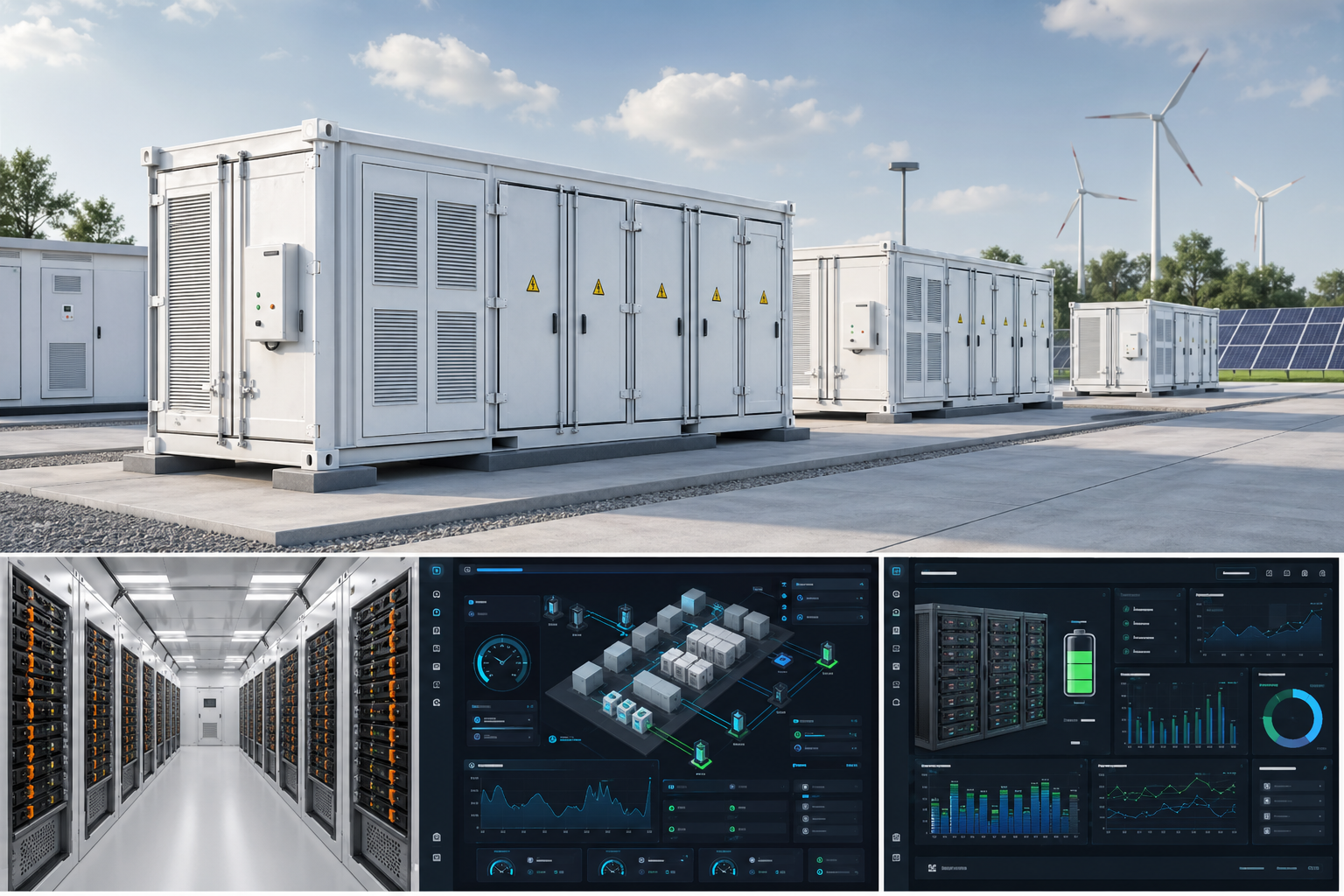
Energy Storage EMS Platform
Charge-discharge strategy execution improved by 21%, downtime reduced by 25%.
Operational Stability
Improved
- Challenge: fragmented PCS/BMS/dispatch data and weak strategy-to-alarm closure.
- Objective: establish unified EMS visibility and optimization workflows.
- Solution: integrated multi-layer telemetry with strategy tracking and alarm closure loops.
- Execution: delivered core monitoring first, then optimized templates and KPI reports.
- Outcome: strategy execution improved by 21%, downtime reduced by 25%.
- Business value: more stable operation and finer controllability of available capacity.
Waste-to-Energy Plant SCADA
Critical process response time reduced by 32%, environmental compliance became more stable.
Operational Stability
Improved
Compliance Control
Improved
- Challenge: siloed telemetry across incineration, boiler, turbine, and environmental systems.
- Objective: build a unified plant-level monitoring and incident linkage platform.
- Solution: integrated major/sub systems with tiered alarms and trend analytics.
- Execution: phased by process segment with duty-flow-oriented threshold tuning.
- Outcome: critical process response time reduced by 32%, compliance control became more stable.
- Business value: lower operational risk and stronger production-environment coordination.
Overseas Oil & Petrochemical SCADA Project
Cross-region visualization coverage improved by 40%, communication disruption impact reduced by 27%.
Visualization Coverage
+40%
Comm Disruption Impact
-27%
- Challenge: complex cross-country network conditions and difficult unified operations.
- Objective: standardize cross-region monitoring, alarming, and permission control.
- Solution: layered collection with central aggregation, offline buffering, and link fault tolerance.
- Execution: regional onboarding with multilingual UI and role-model adaptation.
- Outcome: visualization coverage improved by 40%, communication disruption impact reduced by 27%.
- Business value: smoother global-team coordination and faster risk response.
Brewery SCADA Project
Batch anomaly traceability improved by 28%, key-stage downtime reduced by 19%.
Traceability Efficiency
+28%
Quality Stability
Improved
- Challenge: long trace chain between brewing/fermentation/filling process deviations and quality issues.
- Objective: unify process monitoring and batch traceability workflows.
- Solution: process-stage dashboards with alarm-to-quality trace linkage.
- Execution: rolled out by critical stages, then extended to plant-wide energy-quality analytics.
- Outcome: batch traceability efficiency improved by 28%, key-stage downtime reduced by 19%.
- Business value: stronger production stability and quality governance.
Integrated Fire & Security Platform
Incident closure time reduced by 35%, cross-system false-alert disturbance reduced by 23%.
False-alert Disturbance
-23%
Linkage Efficiency
Improved
- Challenge: isolated fire/access/video/environment systems and fragmented response flows.
- Objective: build a unified security operation platform with standardized handling workflows.
- Solution: integrated multi-system alarms with tiered linkage and emergency templates.
- Execution: prioritized high-risk zones, then expanded cross-team response mechanisms.
- Outcome: incident closure time reduced by 35%, false-alert disturbance reduced by 23%.
- Business value: higher security operation efficiency with stronger auditability.